
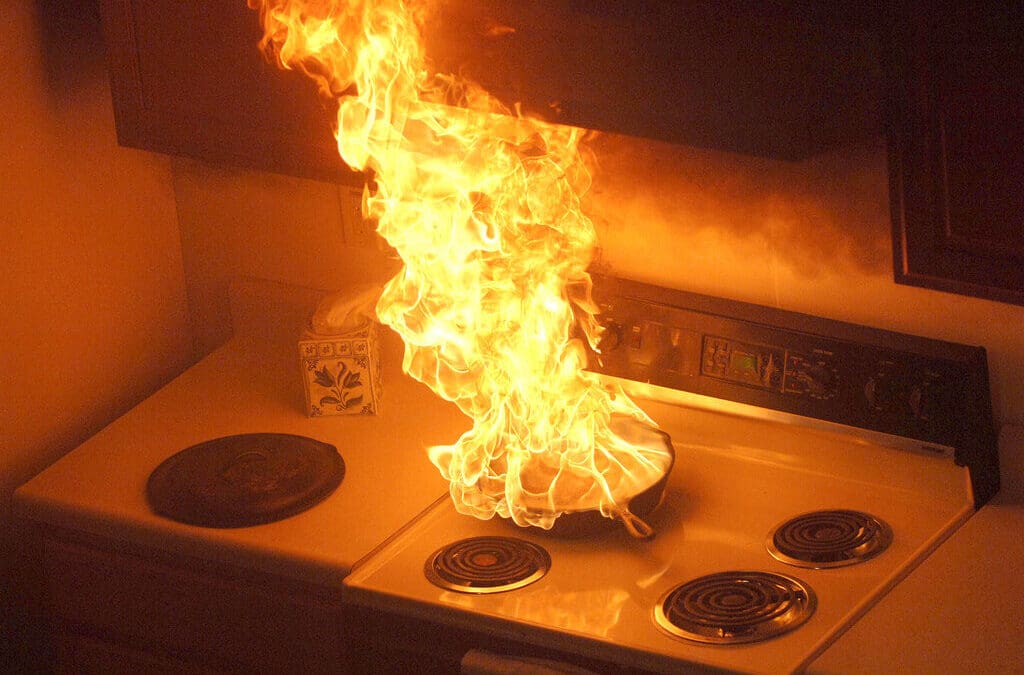
Fire safety is one of those home priorities that most homeowners feel they’ve addressed once the smoke detectors are installed and then rarely think about again until something prompts the thought. The reality is that a functioning smoke alarm is the minimum, not the standard. The homeowners whose households are genuinely protected by fire safety practices have thought through the conditions that cause residential fires, the equipment that detects and suppresses them, and the plans that get people out safely when neither detection nor suppression is fast enough. A smoke detector that goes off in the middle of the night is only the beginning of what complete safety actually requires; what happens in the seconds that follow is what determines the outcome.
The Detection Layer of Home Fire Safety
Smoke detectors are the foundation of home fire safety, but their placement, condition, and type determine whether they actually protect the household or simply create the impression of protection. Detectors should be installed on every level of the home, inside every bedroom, and outside every sleeping area. Most smoke detectors have a ten-year functional lifespan from the manufacture date printed on the back of the unit, and many homes have detectors running well past that window. A carbon monoxide detector on every level is the companion device that addresses the odorless combustion byproduct that fuel-burning appliances can produce with no visible smoke to trigger a standard smoke detector.
Suppression and Prevention
A portable fire extinguisher rated for Class A, B, and C fires, mounted in an accessible location in the kitchen, where the majority of residential fires originate, is the tool that provides the critical window between a small, manageable fire and one that requires evacuation. Most homeowners who don’t have one assume they’ll never need it. Checking the pressure gauge annually to confirm it reads in the operational range takes thirty seconds and confirms the extinguisher will function when needed. On the prevention side, keeping the stovetop clear of combustible materials, never leaving cooking unattended on an active burner, and cleaning the dryer lint trap before every cycle address the three most common ignition sources in residential fire statistics.
The Fire Safety Step Most Households Skip
A household fire escape plan, with two exits identified from every room, a designated meeting point outside, and at least one practiced walkthrough so every occupant knows what to do, is the fire safety investment that requires no equipment or ongoing cost. It is also the one that most families intend to create and consistently postpone. The smoke alarm that wakes a household at 2 AM is only as useful as the plan that follows in the thirty seconds after it sounds. Running through the plan once, confirming that every bedroom window can be opened from inside, and making sure children know the meeting point converts fire safety from a passive installation into an active preparation, which is the standard that actually protects people.
Encompass Home Inspection Service offers home inspections to homebuyers and sellers in Southern New Jersey and Southeastern Pennsylvania. Contact us to schedule our services.