
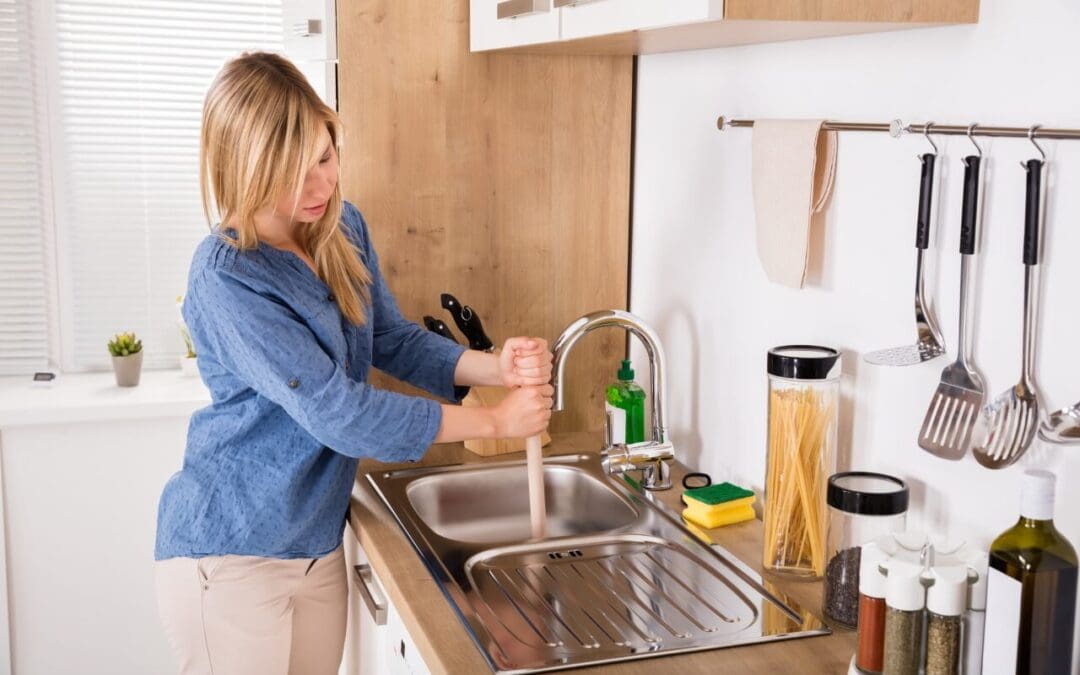
Knowing how to unclog a drain is one of the most practical homeowner skills available, and one of the easiest to develop. Most residential drain clogs are caused by the same handful of culprits: hair and soap scum in bathroom drains, grease and food particles in kitchen drains, and toothpaste and product buildup in bathroom sinks. None of these require a plumber to resolve. Understanding which approach matches the type of clog you’re dealing with is what separates a five-minute fix from an hour of frustration with the wrong tool.
How to Unclog a Drain Without Chemicals
Chemical drain cleaners are widely marketed as the easy solution, but they’re worth avoiding as a first response. They’re corrosive to pipes with repeated use, hazardous to handle, and often ineffective on physical blockages like hair. The mechanical approaches that actually remove the clog work better, faster, and don’t degrade your plumbing in the process. The plunger is the right first tool for any slow or blocked drain. Most homeowners own one but use it incorrectly. For a sink drain, block the overflow opening, the small hole near the top of the basin, with a wet cloth before plunging. This seals the system and allows the plunger to generate the pressure needed to dislodge the blockage. Use a cup plunger for sinks and tubs, create a tight seal over the drain, and use firm, consistent strokes. Ten to fifteen strokes followed by a pull-and-release is typically enough to move a partial blockage.
When to Use a Drain Snake to Unclog a Drain
When a plunger doesn’t fully resolve the problem, a drain snake is the next step and the right tool for most residential clogs that resist plunging. A basic hand-crank drain snake costs $20 to $30 at any hardware store and handles the vast majority of hair and debris clogs in bathroom drains. Feed the snake cable into the drain until you feel resistance, then rotate the handle to engage the clog. The rotating tip either breaks up the blockage or hooks into it so you can pull it out, and pulling the clog out completely is always preferable to pushing it further down the pipe. For bathroom sink and tub drains, removing the drain stopper or strainer before snaking gives the cable a clearer path to the actual blockage.
Preventing Future Clogs
Once you’ve cleared the blockage, a few consistent habits prevent the buildup that causes most residential clogs from forming in the first place. A hair catcher installed over shower and tub drains is the single most effective prevention measure for bathroom drain clogs, the type that accounts for the majority of residential drain calls. These inexpensive mesh inserts collect hair before it enters the pipe, where it combines with soap residue to form the dense blockages that resist plunging. In the kitchen, keeping grease out of the drain is the equivalent habit. Grease poured down the drain solidifies as it cools and accumulates along pipe walls, narrowing the channel over time. Pouring cooled grease into a disposable container prevents most kitchen clogs from developing. Running hot water for thirty seconds after each use keeps residual grease moving through the drain rather than solidifying along the walls.
Encompass Home Inspection Service offers home inspections to homebuyers and sellers in Southern New Jersey and Southeastern Pennsylvania. Contact us to schedule our services.